
Mass General Brigham Podcast
This podcast series features Mass General Brigham staff whose work is redefining what’s possible and how we care for patients. Our goal is to spotlight transformative discoveries, the people leading these transformations, and how they can improve patient outcomes, highlighting how today’s research is shaping the future of medicine, including training the next generation of clinicians and scientists.
Hosted by Dr. Erik K. Alexander, Vice President of Education at Mass General Brigham.


SEASON 2: Learn, Discern & Return - An MGB Physician's Journey
From Trainee to Trailblazer: Atrial Fibrillation, Genomics & the Future of Academic Medicine
Dr. Patrick Ellinor reflects on his 30-year journey through Mass General Brigham—from medical trainee to Executive Director of the Heart and Vascular Institute. He shares how curiosity about familial atrial fibrillation sparked a career in cardiovascular genetics, explores major advances in diagnosing and treating a-fib, and discusses how genomics, collaboration, and the evolving institute model are shaping the future of patient care and academic medicine.
Key Topics: Atrial Fibrillation, Cardiovascular Genomics, Academic Medicine
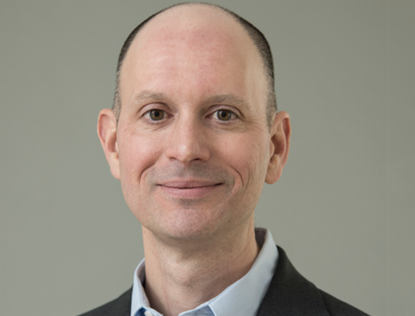
Patrick T. Ellinor, MD, PhD
Executive Director, Heart & Vascular Institute – Mass General Brigham
Director, Cardiovascular Disease Initiative – Broad Institute
Professor of Medicine, Harvard Medical School
Dr. Patrick Ellinor was raised in Cincinnati and graduated summa cum laude from the University of Cincinnati with a degree in Biology. He attended Stanford University for medical and graduate school. After completing doctoral work in the laboratory of Dr. Richard Tsien, he moved to Boston for medical residency at Brigham and Women’s Hospital. He then completed cardiology and cardiac electrophysiology fellowship training at Massachusetts General Hospital.
Dr. Ellinor joined the staff of MGH in 2001, served as the Medical Director of the Cardiac Step-Down Unit for thirteen years, and in 2016 became the Director of the Telemachus & Irene Demoulas Family Foundation Center for Cardiac Arrhythmias. At the Broad Institute of MIT and Harvard, he is an Institute Member and the Director of the Cardiovascular Disease Initiative. He is a Professor of Medicine at Harvard Medical School.
Dr. Ellinor’s research work has initially focused on identifying the molecular basis of atrial fibrillation. His research laboratories are located in the Cardiovascular Research Center at MGH and at the Broad Institute. Dr. Ellinor currently helps to lead the AFGen Consortium, an international group of investigators studying the genetics of atrial fibrillation. His lab has now expanded to a wide range of topics that includes cardiovascular disease genetics, disease mechanisms, single cell sequencing, the application of machine learning to cardiac imaging data, and the development of new therapies for cardiovascular diseases. Over the past 15 years, he has been continuously funded by the NIH, he has received funding from the American Heart Association, the Fondation Leducq and the European Union. Dr. Ellinor is a member of the American Heart Association, the Heart Rhythm Society, and the American Society of Clinical Investigation.
From Patient Care to System Change: A Physician’s Journey in Leadership, Quality & Equity
Dr. Tom Sequist, Mass General Brigham Chief Medical Officer, reflects on his journey from medical trainee to health system leader. He shares lessons on quality and safety, the power of data and continuous improvement, patient experience, health equity, his work with Native American communities, and why staying connected to patient care remains at the heart of his leadership.
Key Topics: Physician Leadership, Quality, Safety, Patient Experience, Health Equity

Tom Sequist, MD
Chief Medical Officer, Mass General Brigham
Professor of Medicine & Health Care Policy, Harvard Medical School
Tom Sequist, MD, MPH is Mass General Brigham’s Chief Medical Officer. In this role, he is responsible for overseeing quality (inclusive of clinical outcomes, patient safety, patient experience, and health equity), community health, pharmacy, and physician wellbeing. He is a practicing general internist at Mass General Brigham and is a Professor of Medicine and Professor of Health Care Policy at Harvard Medical School. Dr. Sequist’s research interests focus on quality measurement and improvement, health care equity, patient and provider education, and the innovative use of health information technology. His prior leadership roles have included Chief Patient Experience and Equity Officer at Mass General Brigham, Chief Quality and Safety Officer at Partners Healthcare System, and Director of Research and Clinical Program Evaluation at Atrius Health.
Dr. Sequist is a member of the Taos Pueblo tribe in New Mexico and has conducted influential health policy research to advance our understanding of health care for Native American communities. He serves as the Director of the Four Directions Summer Research Program and the Medical Director of the Mass General Brigham Outreach Program with Native American Communities.
Dr. Sequist graduated from Cornell University with a BS in chemical engineering. He received his MD degree from Harvard Medical School, and his MPH degree from the Harvard School of Public Health. He is an elected member of the National Academy of Medicine and has been named a Top 25 Minority Leader in Healthcare by Modern Healthcare.
Unlocking Memory: Insights & Innovations in Alzheimer’s Care
Join us in this enlightening episode, where we dive deep into the world of memory and Alzheimer’s disease with Dr. Reisa Sperling, a leader in neurology at Mass General Brigham. Discover her journey from student to expert, the latest advancements in Alzheimer’s research, and the importance of early diagnosis and prevention. Tune in to learn how groundbreaking trials and innovative treatments are shaping the future of patient care and offering hope to those at risk.
Key Topics: Alzheimer’s Disease, Memory Disorders, Neurology, Patient Care
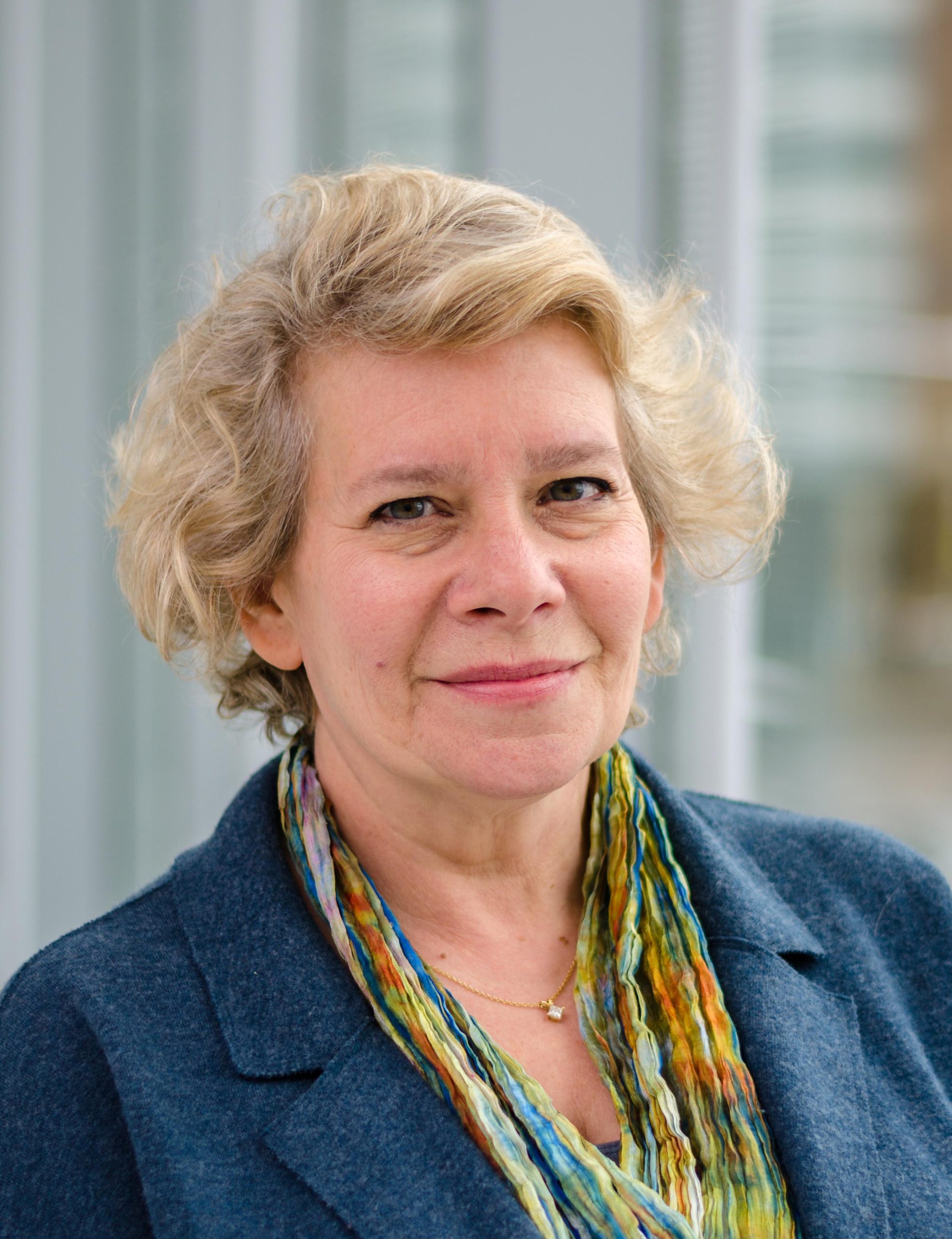
Reisa Sperling, MD
Professor of Neurology, Harvard Medical School
Director, Center for Alzheimer Research & Treatment
Brigham & Women’s Hospital and Massachusetts General Hospital
Dr. Reisa Sperling is a neurologist focused on the detection and treatment of Alzheimer’s disease (AD) at the earliest possible stage, even before clinical symptoms are apparent. Dr. Sperling is a Professor in Neurology at Harvard Medical School, and the Director of the Center for Alzheimer Research and Treatment (CART) at Brigham and Women’s Hospital and Massachusetts General Hospital. Dr. Sperling is the co-Principal Investigator (with her husband Keith Johnson) of the NIH funded Harvard Aging Brain Study. Dr. Sperling chaired the 2011 NIA-Alzheimer’s Association workgroup to develop guidelines for the study of “Preclinical Alzheimer’s disease,” and co-led the workgroup that defined “Amyloid Related Imaging Abnormalities (ARIA) the same year. She co-led the Anti-Amyloid Treatment in Asymptomatic Alzheimer’s disease (A4) Study, the first prevention trial is sporadic preclinical (“presymptomatic”) AD, and the companion LEARN Study, and has made the A4/LEARN longitudinal data publicly available to researchers from around the world. Dr. Sperling co-leads the NIH funded Alzheimer’s Clinical Trial Consortium (ACTC), and the public-private partnership AHEAD 3-45 Study prevention trials, testing targeted dosing of lecanemab in early and late stages of preclinical AD.
Dr. Sperling has long sought to change the way the scientific community and the public thinks about AD, generating compelling evidence that there is a long preclinical phase of the disease, marked by the accumulation of early AD pathology and gradual cognitive decline that begins more than a decade prior to clinically evident impairment. Her foundational work combines molecular PET imaging of amyloid and tau pathology and innovative neuropsychological measures to predict and track cognitive decline. She has made seminal contributions to the design of disease-modifying trials across the spectrum of AD, including work to understand and reduce the risk of ARIA, and the importance of treating much earlier in the pathophysiological process of AD. Dr. Sperling also works on understanding the interaction of vascular disease with AD pathology, including the impact of vascular risk on tau accumulation. Her most recent studies expand into plasma biomarkers and smart phone cognitive assessments, working towards future combination prevention trials.
Dr. Sperling has published over 450 peer-reviewed research articles and mentored over 60 young investigators studying brain aging and early Alzheimer’s disease. Dr. Sperling received the 2015 Potamkin Prize from the American Academy of Neurology, the 2018 Raymond Adams Lectureship Award from the American Neurological Association and was elected to the National Academy of Medicine in 2021.
ABOUT THE HOST

Erik K. Alexander, MD
Vice President of Education, Mass General Brigham
Chief, Thyroid Calcium & Skeletal Health Section – Mass General Brigham
Erik K. Alexander is a physician, educator, and academic leader who serves as Vice President of Education at Mass General Brigham. He is also a Professor of Medicine and Associate Dean for Medical Education at Harvard Medical School, and founded the Brigham Education Institute in 2016 to strengthen collaboration and innovation in healthcare education. Trained at Vanderbilt University, Northwestern University Feinberg School of Medicine, and later Harvard Graduate School of Education, Dr. Alexander combines clinical expertise with a strong focus on educational science and curriculum design.
Dr. Alexander completed his residency and fellowship training at Brigham & Women’s Hospital, specializing in endocrinology and thyroid disorders. His work emphasizes developing future physicians who are not only clinically excellent but also innovative problem-solvers and leaders. Dr. Alexander has authored more than 200 peer-reviewed publications and held leadership roles across major medical and academic organizations.
This podcast is not accredited for CME/CE credits at this time.
SEASON 1: Crossing Medical Frontiers
Harnessing Genetics to Transform Care in Neurovascular Disorders (Patricia Musolino, MD, PhD)
Dr. Patty Musolino shares her inspiring journey from Buenos Aires to the forefront of neurovascular research, highlighting the importance of human genetics in treating cerebrovascular and neuroinflammatory disorders. She discusses the groundbreaking research aimed at understanding and individualizing treatment for severe vascular diseases, which remain a leading cause of death and disability worldwide. Tune in to learn how her work leverages innovative techniques like genome editing and emphasizes the transformative power of collaboration across disciplines.
Key Topics: Human Genetics in Medicine, Neurovascular Disorders, Genome Editing Techniques, Collaborative Research Approaches, Patient-Centered Care, Innovations in Treatment of Vascular Diseases.
CLICK HERE TO LISTEN
Patricia Musolino, MD, PhD
Critical Care and Vascular Neurologist, Massachusetts General Hospital
Assistant Professor of Neurology, Harvard Medical School
Dr. Patricia Musolino is a critical care and vascular neurologist specializing in white matter disorders and cerebrovascular biology. She serves as assistant professor of neurology at Harvard Medical School and co-director of the pediatric stroke service at Massachusetts General Hospital. Dr. Musolino translates human genetics discoveries into clinical applications, focusing on gene mutations that affect cerebrovascular function. Her lab utilizes neuroimaging and gene-editing tools to develop targeted therapies for genetic disorders causing neuroinflammation and stroke. She collaborates with patients and advocacy groups to enhance the lives of affected children and young adults. Dr. Musolino has received multiple awards, including the 2017 Herbert Pardes Clinical Research Excellence Award.
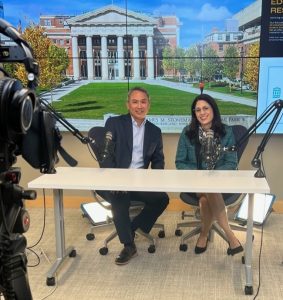
Transforming Heart Health Through Gene & Cell Therapy (Roger Hajjar, MD)
This episode features Dr. Roger Hajjar, founder of the Gene and Cell Therapy Institute at Mass General Brigham. He discusses the revolutionary potential of gene therapy in treating heart failure and chronic diseases, exploring innovative research that aims to transform patient care. Tune in to discover how cutting-edge techniques are paving the way for treatments that could redefine chronic illness management.
Key Topics: Gene Therapy, Heart Health, Chronic Disease, Innovative Research, Patient Care
CLICK HERE TO LISTEN
Roger Hajjar, MD
Director, Gene & Cell Therapy Institute – Mass General Brigham
Co-Founder, Nanocor/AskBio, Medera
Dr. Roger Hajjar is the Director of the Gene and Cell Therapy Institute at Mass General Brigham in Boston, Massachusetts. He has been at the forefront of the development and translation of cardiac gene therapy from early-stage research through to clinical trials. Under his leadership, his laboratory has identified and validated multiple cardiac therapeutic targets, which have culminated in the successful initiation and completion of First-in-Human gene therapy clinical trials for patients suffering from various forms of heart failure.
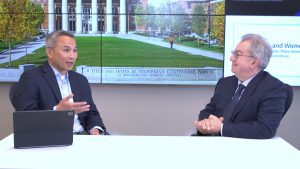
Advancing Early Detection and AI in Lung Cancer Care (Chi-Fu Jeffrey Yang, MD)
n this episode, Dr. Chi-Fu (Jeffrey) Yang discusses his groundbreaking work in early detection of lung cancer and the role of artificial intelligence in enhancing screening protocols. Learn how his personal experiences have shaped his research and advocacy efforts, aiming to revolutionize access to life-saving lung cancer screenings for at-risk populations.
Key Topics: Lung Cancer Screening, Artificial Intelligence, Early Detection, Health Disparities.
CLICK HERE TO LISTEN
Chi-Fu Jeffrey Yang, MD
Thoracic Surgeon, Massachusetts General Hospital
Founding Director of the Center for Artificial Intelligence and Innovation Research (CAIIRE), Massachusetts General Hospital
Associate Professor of Surgery, Harvard Medical School
Dr. Yang is a recognized leader in lung cancer screening advocacy. He founded the American Lung Cancer Screening Initiative and has led significant studies, including a $3.5M NIH trial on postoperative complications in cardiothoracic patients and a $1.5M study on lung cancer screening in Black women. With over 180 publications and numerous accolades, including the 2021 Harvard Medical School Charles McCabe Faculty Prize for Excellence in Teaching, Dr. Yang is also actively involved in legislative efforts to promote lung cancer awareness, having worked on several Senate Resolutions that passed unanimously.

Translating Genomics into Cardiac Care (Pradeep Natarajan, MD, MMSc)
Join us as Dr. Pradeep Natarajan discusses his groundbreaking work in personalized medicine and how genomic insights are transforming preventive cardiology.
Key Topics: Personalized Medicine, Cardiovascular Genetics, Preventive Cardiology, Translational Research, Genomics.
CLICK HERE TO LISTEN
Pradeep Natarajan, MD, MMSc
Director of Preventive Cardiology, Massachusetts General Hospital
Associate Professor of Medicine, Harvard Medical School
Dr. Natarajan is the Director of Preventive Cardiology and the Paul & Phyllis Fireman Endowed Chair in Vascular Medicine at Massachusetts General Hospital, Associate Director of Personalized Medicine at Mass General Brigham, Associate Professor of Medicine at Harvard Medical School, and Associate Member of the Broad Institute of Harvard and MIT. His translational genomics research program spans Massachusetts General Hospital’s Center for Genomic Medicine and Cardiovascular Research Center as well as the Broad Institute’s Cardiovascular Disease Initiative. His scientific contributions include ‘human knockout’ discovery and investigation to prioritize therapeutic targets, monogenic and polygenic characterization of heritable traits through whole genome sequencing, and the novel concept of somatic mutations contributing to cardiovascular disease. In 2023, he was awarded the Joseph A. Vita Award from the American Heart Association “based on work that changes the direction of or has transformative impact on basic, translational, or clinical cardiovascular research in any discipline.” Dr. Natarajan received a B.A. in molecular & cell biology from UC Berkeley, M.D. from UC San Francisco, and M.M.Sc. from Harvard Medical School. He completed residency in Internal Medicine at Brigham & Women’s Hospital, and fellowship in Cardiology at Massachusetts General Hospital.

Redefining Obesity Treatment Through Research and Innovation (Fatima Cody Stanford, MD, MPH, MPA)
Dr. Fatima Cody-Stanford, an esteemed obesity medicine physician-scientist, shares her groundbreaking research on innovative treatment strategies that combine pharmacotherapy and bariatric surgery. She discusses the critical disparities in access to obesity treatments and explores how recent advances are reshaping the future of obesity care. Join us to learn how cutting-edge research is transforming the way we understand and treat obesity in diverse populations.
Key Topics: Obesity Medicine, Bariatric Surgery, Pharmacotherapy, Health Disparities, Metabolic Health.
CLICK HERE TO LISTEN
Fatima Cody Stanford, MD, MPH, MPA
Obesity Medicine Physician Scientist, Massachusetts General Hospital
Associate Professor of Medicine and Pediatrics, Harvard Medical School
Dr. Stanford is among the most highly-cited obesity medicine physician-scientists. She has over 275 peer-reviewed publications and an extensive media presence, including interviews with major outlets like the New York Times and NPR. She advocates for recognizing obesity as a chronic disease and eliminating bias against those with higher weights, which she discussed in a 60 Minutes appearance with Lesley Stahl and an interview with Deborah Roberts. Dr. Stanford holds multiple degrees, including an MD from the Medical College of Georgia and an MPA from the Harvard Kennedy School, and has received numerous accolades, such as the AMA Foundation Leadership Award and the Meritorious Award from the National Medical Association. She has also been selected for the Dietary Guidelines Advisory Committee by the US Department of Health and Human Services and Agriculture for 2025.
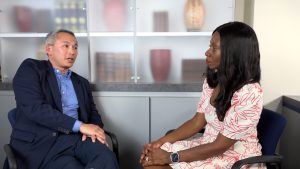

This podcast series was initiated by John Co, MD, MPH, MBA
Dr. Co served as the Vice President of Education at Mass General Brigham, leading MGB’s efforts in undergraduate medical education (UME), graduate medical education (GME), continuing professional development (CPD) and alumni engagement, serving as the inaugural president of the Mass General Brigham Alumni Association. His teaching, scholarly activity, and leadership interests have spanned several areas, including medical education, quality and patient safety, and clinical informatics. A board-certified general pediatrician and health services researcher. Dr. Co has served as Principal and/or Co-Investigator on projects funded by the Agency for Healthcare Research and Quality, World Health Organization, and American Medical Association (AMA), and is the inaugural editor in chief of Pediatrics Open Science.